Moscow vs St. Petersburg vs Kaliningrad: Where to Learn Russian?
Short answer: when you weigh Moscow vs St. Petersburg to learn Russian, the right choice depends on your goal. Choose Moscow for career Russian and big-city networking. Choose St. Petersburg if you want art and architecture alongside your course. Choose Kaliningrad, the third option most people overlook, for real immersion on a budget, especially if you're coming from Germany or Poland, since Kaliningrad is only about 600 km from Berlin. Group course fees are in a similar range in all three cities, roughly €230-280 per week. What really differs is the cost of living and how often daily life forces you to speak Russian.
Every week I get some version of the same email: "I want to learn Russian in Russia, but should I go to Moscow, St. Petersburg, or somewhere smaller?" It's a fair question, and I'm going to answer it as honestly as I can, even though I run a Russian language school in Kaliningrad and obviously have a horse in this race.
I've been doing this for 23 years. I've watched students arrive from Berlin, Munich, and Vienna with big-city dreams of Moscow, and I've watched other students choose Kaliningrad specifically because it's not Moscow. Both groups can be right. It depends entirely on what you actually need from your weeks in Russia. Let me walk you through the real trade-offs, city by city, with real numbers.
This guide compares three cities head to head. If you'd like a wider view, read Best places to learn Russian: 5 cities compared. For a full budget breakdown, see Cost of learning Russian in Russia: 2026 prices, and for the local angle, Why learn Russian in Kaliningrad.
Moscow vs St. Petersburg to learn Russian: the three factors that actually matter
Course quality exists in all three cities, so it rarely decides the question on its own. In practice, three things separate a good study trip from a frustrating one:
- How often you're forced to speak Russian. Lessons give you the grammar; the street, the shop and the bus stop turn it into speech. The more English around you, the slower that happens.
- Your total budget, not just the course fee. Group fees are close across the three cities. Housing, food and transport are where the real gap appears.
- How easy it is to get there. If you have one or two weeks of leave, travel time and visa paperwork matter as much as the timetable.
Keep those three factors in mind as you read the comparison.
Moscow vs St. Petersburg vs Kaliningrad: full comparison table
| Factor | Moscow | St. Petersburg | Kaliningrad |
|---|---|---|---|
| Group course, 1 week | ~€280 (Liden & Denz) | ~€230 (Educa) | ~280 EUR (PRIVET!, mini-group, 20 lessons) |
| Individual lesson (45 min) / mini-group lesson | €25-35 | €20-28 | 18-22 EUR individual; 14-18 EUR mini-group |
| Visa | E-visa: online, 50-60 EUR, no embassy, ~4 days (valid for all of Russia) | E-visa: online, 50-60 EUR, no embassy, ~4 days (valid for all of Russia) | E-visa: online, 50-60 EUR, no embassy, ~4 days (valid for all of Russia) |
| Distance from Central Europe | ~2,000 km from Berlin | ~1,600 km from Berlin | ~600 km from Berlin; direct buses from Berlin, Stuttgart, Hannover, Gdańsk |
| English on the street | Common in center, tourist zones | Very common - hardest city to "force" immersion | Limited - genuine immersion, you're pushed to use Russian |
| Cost of living (food, transport, housing) | High - comparable to major EU capitals | Medium-high | Noticeably cheaper than Moscow/SPb; host family 250 EUR/week (breakfast only), room in a student flat 12,000-14,000 ₽/week, own apartment 140-250 EUR/week |
| City size / pace | 12+ million, overwhelming for beginners | 5+ million, big and touristy | ~500,000, walkable, calm |
| Typical class size | Varies by school, often 6-8 in groups | Varies by school, often 6-10 in groups | Mini-groups of 2-4 students; individual lessons 18-22 EUR / 45 min |
| Bildungsurlaub accreditation | Some schools | Some schools | Yes - Brandenburg, Hamburg, Rheinland-Pfalz, Niedersachsen, Thüringen |
| Best for | Career Russian, culture, business networking | Architecture, museums, tourism combined with study | Fast progress, beginners, budget-conscious, short trips |
A note on the price comparisons: I'm using publicly listed group-course rates from well-known schools - Liden & Denz in Moscow (~€280/week for a standard group course) and Educa in St. Petersburg (~€230/week). The Moscow and St. Petersburg figures for individual lessons, class sizes and Bildungsurlaub are indicative market ranges rather than quotes from one specific school. Our own group rate at PRIVET! is 280 EUR for a full week of mini-group lessons (20 lessons of 45 minutes), plus a one-time 80 EUR registration fee that covers the placement test, learning materials, school events and your course certificate. A week of 20 individual lessons is 440 EUR. These are approximate figures and can change, so always check current pricing directly with each school.
Learning Russian in Moscow: culture and career, at a price
Moscow is Russia's capital and its most internationally connected city. If your goal is specifically business Russian, if you're planning a career that involves Moscow-based companies, or if you simply want the "biggest city" experience with world-class theaters and museums, a Russian language course in Moscow is a legitimate choice.
But be honest with yourself about two things:
- Cost. Everything - course fees, housing, food, transport - runs at big-capital-city prices. You'll pay noticeably more than in a regional city for the same number of lessons and the same standard of living.
- Overwhelm for beginners. With many of our own students arriving at A0-A2 level, I can tell you from two decades of watching this pattern: a 12-million-person megacity is a lot to navigate on top of learning your first Cyrillic letters. Some students thrive on that energy. Many find it exhausting, and it eats into study focus.
Who Moscow is right for
Intermediate-to-advanced students with a professional reason to be there, comfortable navigating a big city, and with a budget that can absorb capital-city prices.
Learning Russian in St. Petersburg: beautiful, but not always immersive
St. Petersburg is, without argument, one of the most beautiful cities in the world. If you want to combine language study with serious art and architecture tourism, it delivers in a way few places can. Rivers, palaces, the Hermitage: it's a magnetic place to spend a few weeks.
The catch, for language learners specifically: St. Petersburg is also Russia's most tourist-facing city. English is spoken widely in the city center - in cafes, hotels, shops, even by younger locals just being friendly to visitors. That's wonderful for a tourist.
It's a genuine handicap, though, if you want to learn Russian in St Petersburg by forcing yourself to speak it, because the path of least resistance is always available: switch to English and move on. I've had students describe this exact frustration after transferring from Petersburg programs to ours. The temptation to lean on English is constant when everyone around you can also speak it.
Who St. Petersburg is right for
Students who want a strong tourism and culture component alongside their studies, and who are self-disciplined about speaking Russian even when English is an easy out.
Learning Russian in Kaliningrad: full immersion and honest pricing
Now for the city I actually run a school in, and I'll try to be precise rather than promotional. Here is what our Russian courses in Kaliningrad offer that the two big cities don't.
1. The closest Russian city to Germany and Poland
Kaliningrad sits about 600 km from Berlin, with direct buses from Berlin, Stuttgart, Hannover and other German cities, and from Gdańsk. Compare that to roughly 2,000 km to Moscow and 1,600 km to St. Petersburg from the same city. If you live in Germany, Poland, or the Baltics, Kaliningrad is genuinely the most convenient Russian city to reach.
To be clear about the paperwork: Russia's electronic visa is valid for the whole country, so it works for Moscow and St. Petersburg too. You apply online, with no embassy visit and no printed invitation letter, and it's typically processed in about 4 days. It's valid for a stay of up to 30 days and costs 50-60 EUR (citizens of 64 countries are eligible). What makes Kaliningrad different is the combination: a fast e-visa plus a short overland trip from Central Europe. For students who come for 1-2 weeks, that's not a minor convenience. It's the difference between "I'll think about a trip to Russia next year" and "I decided in June, I'm here in August." See the full e-visa guide, or read our article on the Russian e-visa for a language course (up to 30 days).
2. Real immersion, because you don't have a choice
This is the part that surprises people most. Kaliningrad is a mid-sized city of about half a million people, and unlike Moscow or St. Petersburg, it is not built around international tourism. English is not the fallback option here: shopkeepers, taxi drivers, and neighbors mostly speak Russian and only Russian. That's uncomfortable for the first few days and then becomes exactly the engine that makes students progress fast. You're not choosing immersion as a discipline; the environment does it for you.
3. Noticeably lower cost of living, without cutting corners on teaching
Accommodation, food, local transport - all of it runs noticeably below Moscow and St. Petersburg pricing (you can compare current city figures on Numbeo, listed in the sources below). That's not because the teaching is lower quality; it reflects Kaliningrad's overall cost of living relative to Russia's two largest cities. To give you concrete numbers: a host family costs 250 EUR per week (breakfast only), a room in a student flat is 12,000-14,000 ₽ per week, and your own apartment runs 140-250 EUR per week. It means the same overall budget for a study trip goes meaningfully further.
4. Small-city calm, mini-groups of 2-4 students
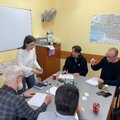
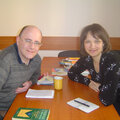
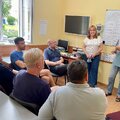
We teach in a city small enough to walk across in an afternoon. Our mini-groups have just 2-4 students, so you speak far more in every lesson than in a class of eight or ten. For a beginner navigating their first weeks of Cyrillic and case endings, that lower-stimulation environment is not a downgrade from Moscow's energy. For most people, it's what actually lets the language sink in.
5. Bildungsurlaub accreditation
For our German-speaking students, our courses are accredited as Bildungsurlaub (paid educational leave) in five states: Brandenburg, Hamburg, Rheinland-Pfalz, Niedersachsen, and Thüringen. That's a concrete, bureaucratic advantage: your employer keeps paying your salary for the study days, while the course fee itself is paid by you.
The honest trade-off: Kaliningrad doesn't have the Hermitage or the Bolshoi. If your priority is world-class museums and big-city culture on top of your course, Moscow or St. Petersburg deliver something we don't try to compete with. But if your priority is actually acquiring the language - quickly, affordably, and without an easy English off-ramp - the trade-off runs the other way.
Who Kaliningrad is right for
Beginners and near-beginners (which, again, describes many of our own students: most arrive with a small base, and around 30% or fewer start from zero - our guide for absolute beginners explains how the first weeks work), people with limited vacation time, budget-conscious learners, relocators exploring life in Russia under Decree 702 (a residence pathway for foreigners who share Russian traditional values), and anyone who wants immersion rather than a big-city experience with Russian lessons attached.
Not ready to travel yet? Many students start with online Russian lessons with a native teacher (16-18 EUR per 45 min, via Edvibe or Teams) to learn Cyrillic and basic phrases before the trip. You then arrive in Kaliningrad able to use the city from day one, instead of spending your first week decoding signs.
Best city to learn Russian for your goal: a quick gut-check
| If your priority is... | Go to |
|---|---|
| Business Russian, career networking, big-capital energy | Moscow |
| Architecture, museums, culture tourism alongside study | St. Petersburg |
| Low cost, real immersion, short trip | Kaliningrad |
| You're a total beginner (A0-A2) and want to build confidence fast | Kaliningrad |
| You're exploring relocation to Russia | Kaliningrad |
| You have only 1-4 weeks, decided late, and live in Germany or Poland | Kaliningrad (e-visa + direct buses, 600 km from Berlin), for example our Summer School |
Moscow, St Petersburg or Kaliningrad: how to decide in one paragraph
Ask yourself what you're actually optimizing for. If it's a city experience with Russian lessons as one part of a bigger trip, Moscow or St. Petersburg are legitimate, well-established choices - just budget for higher prices. If you're optimizing for speaking Russian confidently, as fast as possible, and without paying capital-city prices, that's the specific problem Kaliningrad solves.
See our courses in Kaliningrad
FAQ: Moscow, St. Petersburg or Kaliningrad to learn Russian
-
Is Kaliningrad actually a good place to learn Russian, or is it just cheaper?
It's both, but the cost isn't the main argument - immersion is. Because Kaliningrad isn't a major international tourist hub, you'll consistently need to use Russian in daily life, which is exactly the condition that accelerates language acquisition. The noticeably lower cost of living compared with Moscow and St. Petersburg is a real bonus on top of that, not the whole story.
-
Do I need a full Russian visa to study in Kaliningrad?
No. For a stay of up to 30 days the e-visa is enough: a fully online application (50-60 EUR), no embassy visit, typically processed in about 4 days. The e-visa is valid for all of Russia, Kaliningrad included, so it works equally for Moscow and St. Petersburg. For longer courses, we can invite you for a 3-month student visa. See our e-visa guide for the exact steps.
-
Is Kaliningrad too small to have good teachers?
We've been teaching there since 2003 and have taught 1,800+ students, with in-person classes in Kaliningrad and online lessons via Edvibe and Teams. You can read independent student reviews on languagecourse.net. City size doesn't correlate with teaching quality - it correlates with how much English you'll be tempted to fall back on outside class.
-
I'm a complete beginner. Which city should I choose, and how much can I learn in 2 weeks?
Start where the environment does some of the work for you. Many of our own students arrive at A0-A2 level, and a calmer, smaller city with genuine immersion tends to build confidence faster than a 12-million-person capital where you can coast on English. Be realistic about pace, though: after 2 weeks from zero you'll read signs, order food and hold a simple conversation, but that is not yet A1. Reaching A1 takes at least 120 study hours, or about 6 weeks at 20 lessons a week. Many beginners start with online lessons before the trip. See our guide for absolute beginners.
-
Are Moscow and St Petersburg Russian language schools actually more expensive?
Based on publicly listed group-course rates, course fees are in a similar range: Liden & Denz in Moscow lists group courses around €280/week; Educa in St. Petersburg around €230/week. Our mini-group week in Kaliningrad (20 lessons) is 280 EUR, plus a one-time 80 EUR registration fee. The bigger difference is day-to-day living costs (food, transport, accommodation), which are noticeably lower in Kaliningrad than in Moscow and St. Petersburg. Numbeo's city-by-city data is a good place to compare current figures.
Ready to start? Contact us for a free consultation - the placement test is included in the 80 EUR registration fee. Not ready to travel yet? Start with online lessons with a native teacher from 16-18 EUR per 45 min.
Sources
- Numbeo: Cost of Living in Russia - City-by-city cost comparisons for Moscow, St. Petersburg, and Kaliningrad
- Russian Electronic Visa Portal - Official application portal, eligible countries and e-visa rules (valid for all of Russia)
- CEFR (Council of Europe) - Common European Framework for language proficiency levels
- LanguageCourse.net - Independent price comparisons and student reviews for schools in all three cities
About the Author
Irina Vinokurova is the founder and director of PRIVET! Russian Language School in Kaliningrad, Russia. Since 2003, she has built the school from a solo teaching practice into a team of in-person and online teachers, teaching 1,800+ students along the way. The school is Bildungsurlaub-accredited in five German states. Irina writes from direct experience running the school's day-to-day teaching and admissions.
Irina responds to every inquiry personally, so you can ask her directly which city fits your goals.
- WhatsApp: +7 911 476-25-49
- Email: privet@myrussian.ru
- Website: myrussian.ru
Related articles on learning Russian in Russia
- Best Places to Learn Russian in Russia: 2026 Guide
- How Much Does It Cost to Learn Russian in Russia? 2026 Prices
- Why Kaliningrad? The Case for Learning Russian in Europe's Closest Russian City
Categories: Study in Russia · Kaliningrad
Keep Reading
- Why Kaliningrad Is the Best City to Learn Russian - 10 min read
- How Much Does It Cost to Learn Russian in Russia? - 10 min read
- Best Places to Learn Russian in Russia - 12 min read
Ready to Start?
Book Your Course at our Russian language school in Kaliningrad → or write to Irina directly: WhatsApp · privet@myrussian.ru