Kaliningrad, Russia: A Practical Guide for Foreigners (2026)
Kaliningrad is the westernmost city of Russia: a Baltic port that was the German city of Königsberg until 1945. It is now separated from the rest of Russia by Lithuania and Belarus, and it borders Poland and Lithuania. I have run a language school here since 2003, and more than 1,800 students have studied with us. Their questions are always the same: where exactly is it, why is it Russian, how do I get there, do I need a visa, and what does life cost. This Kaliningrad guide for foreigners answers them with the numbers our students actually see.
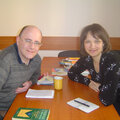
Irina Vinokurova, director of PRIVET! Russian Language School, Kaliningrad
Kaliningrad, Russia at a glance
| Fact | Kaliningrad |
|---|---|
| Where | Russian exclave on the Baltic Sea, between Poland (south) and Lithuania (north and east) |
| Population | about 500,000 in the city, about 1 million in the region |
| Distance | about 600 km from Berlin, further from Moscow than from Berlin |
| Time zone | UTC+2, one hour behind Moscow |
| Language | Russian; English is limited outside hotels and some cafés |
| Currency | Russian rouble |
| Climate | mild Baltic: winters around 0°C, summers around 20°C |
Where is Kaliningrad and why is it part of Russia?
Until 1945 the city was Königsberg, the capital of East Prussia: home of the philosopher Immanuel Kant, of amber and of Hanseatic brick architecture. After the Second World War the northern part of East Prussia was given to the Soviet Union, and in 1946 the city was renamed Kaliningrad. When the Soviet Union broke up in 1991, Lithuania became independent and the Kaliningrad region turned into an exclave: Russian territory with no land border with the rest of Russia. To drive to mainland Russia you have to cross Lithuania and Belarus.
That history is visible everywhere. Next to Soviet blocks you find the restored Königsberg Cathedral with Kant's tomb, red-brick city gates from the 19th century and the villa district of Amalienau. Kaliningrad is not a German city with a Russian surface; it is a Russian city with German traces, and that mix is what makes it unusual.
How to get to Kaliningrad
- By air: there are no direct flights from the EU. Flights connect Kaliningrad with Moscow and St Petersburg. If you are coming from the US, the UK or India, the usual route is to reach Moscow or St Petersburg first and take a domestic flight from there.
- By bus from Germany: direct buses run from Bremerhaven, Berlin, Stuttgart, Heilbronn and other German cities, with stops in Cologne, Potsdam, Hannover and elsewhere. If you are not an EU citizen, remember that this route crosses the Schengen area, so you need a valid Schengen entry as well as your Russian visa.
- From Poland: many buses run daily from Gdańsk, including from Gdańsk airport, and there are buses from Warsaw. The same Schengen rule applies to non-EU travellers.
Write to us - we'll find the best route for you and can buy tickets and Russian medical insurance in advance.
Practical details for students from Germany are in our article on living in Kaliningrad as a German (in German).
Do I need a visa for Kaliningrad? (Russian e-visa)
Yes, most foreigners do. The simplest option is the Russian e-visa: citizens of 64 countries can apply online, it costs 50-60 EUR, takes about 4 days to process and allows a stay of up to 30 days. The e-visa is not free, and it is valid for the whole of Russia, not only Kaliningrad. Step-by-step instructions: e-visa for a Russian course. For courses longer than 30 days, we issue an invitation for a 3-month student visa.
Cost of living in Kaliningrad (2026 prices)
Kaliningrad is much cheaper than Western Europe and noticeably cheaper than Moscow. These are typical 2026 prices our students report:
| Expense | Kaliningrad |
|---|---|
| 1-room apartment, city centre | 300-400 EUR / month |
| 1-room apartment, outside the centre | 200-280 EUR / month |
| Room in a shared flat | 150-200 EUR / month |
| Lunch in a café | 5-8 EUR |
| Cappuccino | 2-3 EUR |
| Groceries | 150-200 EUR / month |
| Public transport, monthly | about 20 EUR |
| Mobile internet, unlimited | 8-12 EUR / month |
A realistic monthly budget is about 500 EUR if you live frugally and 800-1,200 EUR if you want to live comfortably. Eating out varies a lot, from simple canteens to restaurants, and some host families let you cook at home, so ask us when you plan your course and we will give you a realistic picture. Apartments are found on the Russian platforms Avito and Cian; both require some Russian or a helper, and rental contracts are in Russian.
Where to live in Kaliningrad
- Amalienau: quiet, green streets with early 20th-century villas; the most "European" district, prices are higher.
- City centre: everything within walking distance, good infrastructure, can be noisy.
- Zelenogradsk: a Baltic seaside town 30 minutes by train, popular with people who move here, lower rents.
For a first stay, many of our students skip the apartment search altogether and start by living with a host family: you arrive to a furnished room, a local contact and daily Russian practice at the breakfast table.
Things to do in Kaliningrad: what to see in and around the city
- Königsberg Cathedral and Kant's tomb on Kneiphof Island, with organ concerts and the Kant museum.
- The city gates: the Friedland Gate museum tells the history of Königsberg with original finds.
- The Curonian Spit: a UNESCO World Heritage sand spit with high dunes and the "Dancing Forest" of twisted pines.
- Svetlogorsk and Zelenogradsk: Baltic resorts with beaches and old German spa architecture, both reachable by local train.
- Amber: the region holds most of the world's amber deposits; you can see it in the Amber Museum and in the town of Yantarny.
Learning Russian in Kaliningrad: why the city works for language students
Outside hotels, almost everything happens in Russian: shops, buses, doctors, the market. For a tourist that is a hurdle; for a language student it is the point. You use every new word the same day. Before you come, learn to read the Russian alphabet and a few greetings: it changes your first week completely. If you are still choosing a city, see how Kaliningrad compares to Moscow and St Petersburg.
At PRIVET! students study in mini-groups of 2-4 people (280 EUR for a week of 20 lessons, plus a one-time 80 EUR registration fee that covers the level test, materials, school events and a certificate) or individually, and many live with a host family (250 EUR per week, breakfast included), the fastest way to start speaking. More about the city as a place to study: why Kaliningrad is the best-kept secret for language students.
Frequently asked questions about Kaliningrad
-
Is Kaliningrad part of Russia?
Yes. Kaliningrad and its region have been part of Russia since 1945 (Soviet Union until 1991). It is an exclave: separated from the rest of Russia by Lithuania and Belarus, and bordering Poland and Lithuania.
-
Where is Kaliningrad?
On the Baltic Sea between Poland and Lithuania, about 600 km east of Berlin.
-
What was Kaliningrad called before?
Königsberg, the capital of East Prussia. It was renamed Kaliningrad in 1946.
-
Do I need a visa to visit Kaliningrad?
Most foreigners do. Citizens of 64 countries can use the Russian e-visa: 50-60 EUR, about 4 days processing, up to 30 days of stay, valid in all of Russia. For longer courses, the school issues an invitation for a 3-month student visa.
-
How do I get to Kaliningrad from Germany?
There are no direct flights from the EU. Direct buses run from Berlin, Stuttgart, Hannover and other German cities; there are also many daily buses from Gdańsk in Poland, and buses from Warsaw. Non-EU citizens need a valid Schengen entry for this route.
-
How much does it cost to live in Kaliningrad?
Our students report about 500 EUR a month for a frugal lifestyle and 800-1,200 EUR for a comfortable one. A 1-room apartment in the centre costs 300-400 EUR a month.
-
Do people speak English in Kaliningrad?
Some younger people and hotel staff do, but daily life is in Russian. Knowing the alphabet and basic phrases helps a lot.
Related articles
- Why Kaliningrad Is the Best Place to Learn Russian
- Moscow vs St Petersburg vs Kaliningrad
- From Tourist to Resident: Learning Russian for Your Move to Russia
- Russian Homestay: Living with a Local Family
Want to see Kaliningrad from the inside?
Come for a 2-4 week Russian course and test life here before you decide anything bigger. Courses in Kaliningrad → or write to Irina directly: contact form · privet@myrussian.ru
Not ready to travel yet? Start with online lessons on Edvibe or Teams (16-18 EUR per 45-minute lesson) and arrive in Kaliningrad already able to read, greet and order.